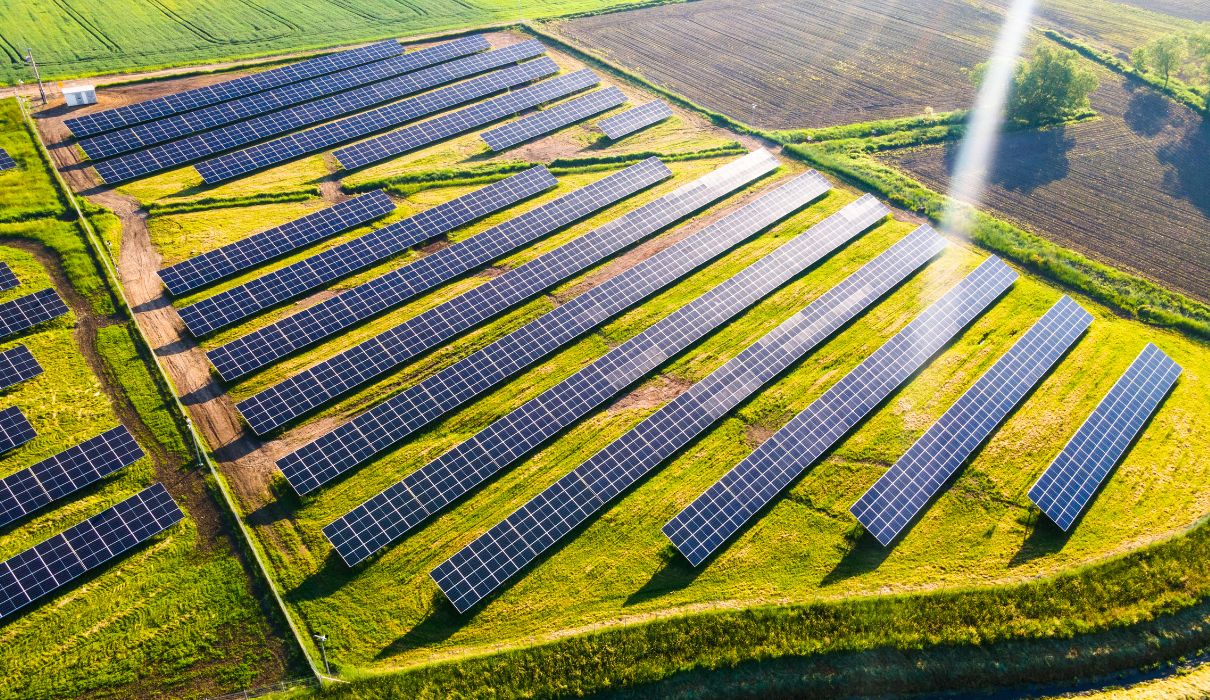
Agri-voltaic farming — sometimes called agrivoltaics or agri-PV — is the practice of installing solar arrays above actively-farmed land, so the same hectare produces both electricity and crops. It's a promising approach in specific situations and a poor fit in others. Here's how to tell which applies to you.
The basic idea
Traditional ground-mount solar requires dedicated land, taking that land out of agricultural production. Agri-voltaic installations raise the panels higher (typically 3–5 metres) and space the rows wider, creating a partially-shaded growing environment underneath that still permits crops, grazing, or both.
The idea isn't new — research installations have been running for 15+ years — but it's only recently become economically viable at commercial scale as panel prices have dropped and specialised mounting structures have matured.
When agri-voltaic actually helps crops
Partial shading is beneficial for some crops and harmful for others. It's beneficial when:
- Heat stress is a growing concern. Shade reduces evaporative water loss and protects plants from extreme temperatures.
- The crop is shade-tolerant. Leafy greens (lettuce, spinach, kale), some herbs, some berries, and crops like coffee and cacao benefit.
- Water is expensive or limited. Reduced evapotranspiration lowers irrigation needs, sometimes substantially.
- Ground temperature matters. Cooler soil can extend growing seasons in hot climates.
For these crops, studies have sometimes shown yield improvements of 10–60% under partial shading compared to full sun, particularly during heatwaves.
When agri-voltaic hurts crops
Many staple crops need full sun:
- Rice — needs full sun for grain filling; shading can reduce yield significantly.
- Wheat, maize, soybeans — similar story; yields drop under meaningful shading.
- Fruit trees (most) — especially those that require high light for fruit set.
- Sugar cane, cotton — high sun-demand crops.
On land producing these crops, traditional ground-mount on marginal land often makes more sense than agri-voltaic that reduces food production.
If someone pitches agri-voltaic as universally beneficial — be cautious. The economic case varies hugely by crop. For most staple agriculture, standard ground-mount on non-productive land is a better answer.
Livestock variations
Agri-voltaic also applies to grazing. Solar arrays with enough clearance for sheep, poultry, or small cattle can produce electricity while supporting livestock. Sheep grazing under solar is particularly well-studied and has proven economically viable in multiple regions — sheep keep vegetation low without damaging panels, and the shade benefits animal welfare during hot periods.
The economics look like this
Agri-voltaic installations typically cost 15–40% more per kWp than standard ground-mount, because of:
- Taller, more complex mounting structures.
- Wider row spacing (lower kWp per hectare).
- Sometimes specialised tracking or vertical panel designs.
- More complex electrical design.
This premium pays off when:
- Land is constrained and dual-use generates meaningfully more total revenue than either use alone.
- The specific crop benefits from partial shade (increasing crop revenue).
- Local policy or incentives favour dual-land-use.
- The farm's electricity demand absorbs much of the solar production on-site.
Design complications worth knowing
- Mechanisation. Row spacing must accommodate tractor and harvester access. Retrofitting mechanised access to a finished installation is hard.
- Shading patterns. Crops underneath see moving shade strips through the day. Some respond well; some don't.
- Irrigation. Drip irrigation usually works well; overhead irrigation conflicts with the structure.
- Maintenance access. Panel cleaning, inverter access, and crop-tending need to coexist.
How to know if it's right for your farm
The practical test is:
- List the crops you grow or want to grow. Which are shade-tolerant?
- Assess the current economic performance per hectare for those crops.
- Compare: (land value as crop-only) vs (land value as dual-use agri-voltaic) vs (partial land as crop + partial land as solar).
- Factor in how your farm uses electricity — on-site consumption makes agri-voltaic especially attractive.
Sometimes the answer is agri-voltaic. Sometimes it's traditional solar on a corner of the property. Sometimes it's no solar at all until something changes. Good advisory means saying which of the three applies.