Ground-mount, solar pumping, and agri-voltaic — engineered for farm economics.
Farms have more usable land than rooftops, different capital cycles, and different electricity needs. We design solar for how farms actually run — pumping on demand, shading for crops, and systems that can be maintained by non-specialists.
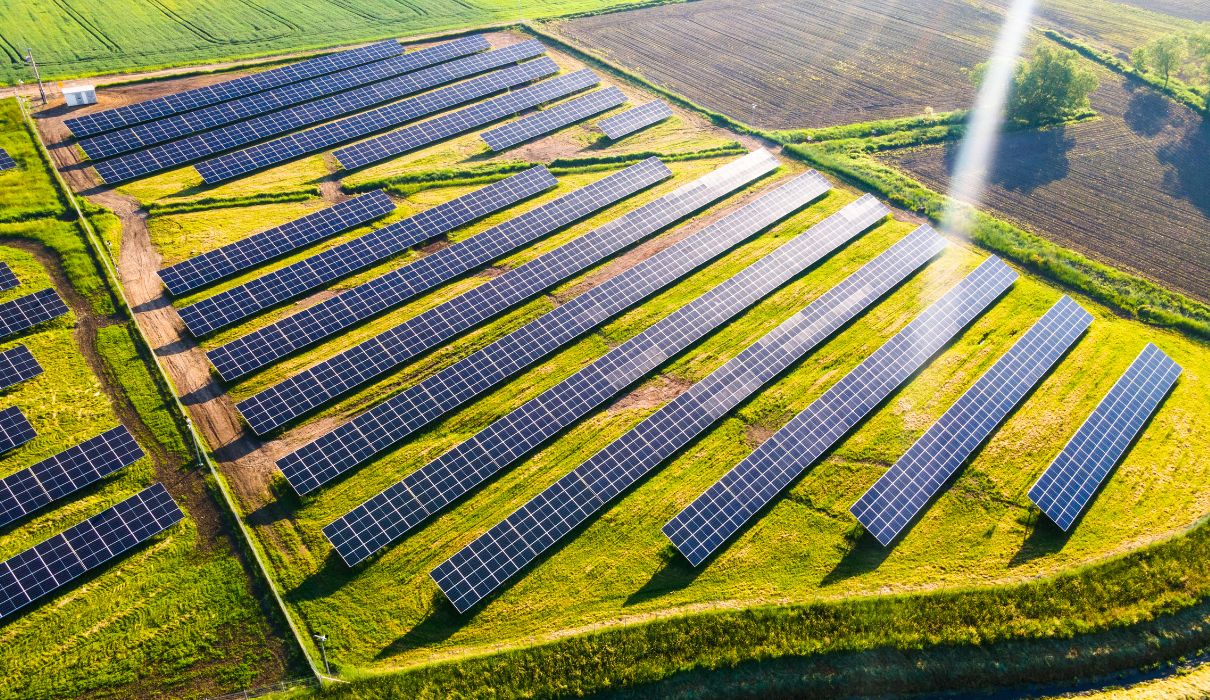
Three things farms do with solar
Agricultural solar usually takes one of three forms, and which one fits depends on your land, your crops, and your grid connection.
- Ground-mount arrays on non-productive land.Fence lines, sloped areas, or marginal ground that isn't producing crop revenue. Sized against the farm's own electricity consumption plus any export potential.
- Solar pumping.Direct-drive solar irrigation, borewell pumping, or livestock watering — systems that run when the sun runs, with or without battery buffer. Lower capex than grid-tied irrigation; zero ongoing fuel cost.
- Agri-voltaic arrays.Solar mounted above crops that benefit from partial shading — leafy greens, berries, certain orchard crops, coffee, some pasture. Dual revenue from the same land.
Not every crop benefits from partial shade. Some crops see yield gains; others see losses. Before recommending an agri-voltaic design, we work through the specific crop economics for your situation — and sometimes the answer is "standard ground-mount on a different parcel of the farm."
What's included
- Land assessmentSoil type, slope, drainage, access for construction and maintenance. We survey before we design.
- Production modellingYield based on local irradiance, with seasonal variation broken out for monsoon or dry-season planning.
- System designGround-mount racking appropriate to your soil and wind loading, string layout, inverter sizing, cabling runs to farm switchgear or pump points.
- Components rated for outdoor, all-season usePanels, mounting, cabling, and enclosures that handle dust, humidity, and the thermal cycles of farm environments.
- Installation and commissioningCoordinated through our certified partner network — civil works, structural mounting, electrical install, grid connection (for grid-tied systems), and commissioning.
- Maintenance planDesigned so that routine cleaning and visual inspection can be done by farm staff. Deeper service handled on scheduled visits.
Solar pumping economics
Solar pumping is often the fastest-payback application of solar on a farm — especially where the alternative is diesel pumping or grid extension to a remote borewell. A direct-drive solar pump has no battery, no inverter replacement cycle, and minimal maintenance. For borewell and irrigation applications where pumping demand aligns with sunny hours, the economics are usually straightforward.
Where pumping needs to happen at night or through cloud cover, battery buffer or grid-backed hybrid systems change the calculus. We'll tell you which applies to your situation during the feasibility assessment.
How the process runs
- Initial call. What you grow, what you pump, what you currently pay for power.
- Site visit. Land survey, soil and drainage assessment, existing electrical infrastructure review.
- Feasibility & design proposal. Yield model, bill of materials, financial model.
- Contract and milestone payments.
- Civil works and installation. Coordinated with our partner installer — ground-mount racking foundations, electrical install, commissioning.
- Maintenance training for farm staff. Routine cleaning, basic monitoring.
- Ongoing service. Scheduled inspections and long-term performance monitoring.
Frequently asked
See what solar can do for the farm.
Tell us what you grow, what you pump, and how you currently pay for power. We will work out what makes sense.